Practical Guides
Why Deciding What to Eat in Advance Changes Everything
The hardest moment to make a good food choice is when you're already hungry. Meal planning quietly solves that — and it's one of the highest-leverage eating habits you can build.
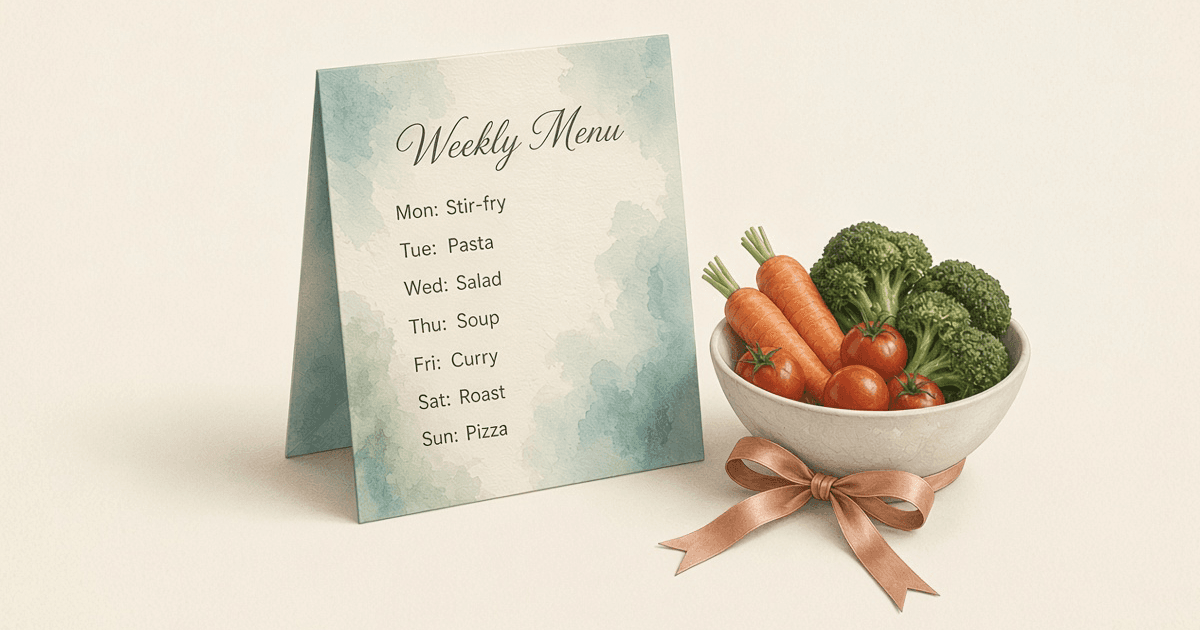
Here's the moment most healthy-eating intentions fall apart: it's 6pm, you're tired and hungry, the fridge holds a random assortment of ingredients, and deciding what to cook feels like too much. So you order a takeaway or grab something quick. It's not a willpower failure — it's a timing failure. You're being asked to make a good decision at the exact moment you're least equipped to. Meal planning fixes this by moving the decision to a better time, and it turns out to be one of the most powerful eating habits you can build.
(A quick note: this is general information about a food habit, not dietary or medical advice. Everyone's nutritional needs are different.)
The problem is when you decide, not willpower
When you decide what to eat while you're already hungry, your choices skew toward whatever's fastest and most tempting — that's just how a hungry brain works. Meal planning sidesteps this entirely. By deciding your meals in advance, when you're calm and not ravenous, you get to make the choice with a clear head.
Research on meal planning backs this up strongly. Studies consistently link planning meals ahead with healthier eating, more home-cooked meals, less fast food, and greater variety of foods — largely because the decision happens away from the pressure of hunger. Behavioural scientists describe it simply: when you already know what you're going to eat, you make better choices and avoid the last-minute impulse grab. You're not relying on willpower in a weak moment; you've removed the weak moment from the equation.
This is the environment-and-friction principle applied to the whole week: a plan makes the good choice the easy, default one.
What the research actually found
The evidence here is genuinely solid and comes from real studies, not just intuition:
- A study of nearly 500 people (published in Appetite) found meal planning reduced fast-food consumption and increased home cooking and family meals.
- Research tracking food-preparation habits over ten years found that people who cooked at home more often had better diet quality years later — the habit compounds.
- Studies link meal planning with greater intake of fruit and vegetables and more food variety.
The through-line: planning ahead reliably nudges people toward eating better, without any single act of heroic self-control. It's the system doing the work.
You don't need to be elaborate
When people hear "meal prep," they often picture influencers with fifteen identical containers of chicken and rice lined up like a photoshoot. Forget that — it's not the point, and for most people it's not sustainable. Meal planning can be as simple as:
- Deciding a few dinners for the week — even just roughly. Knowing "Monday is pasta, Tuesday is stir-fry" removes the daily "what shall we eat?" stress.
- A simple, repeatable rotation. You don't need endless variety. A handful of meals you know how to make and enjoy, rotated through the week, is a perfectly good plan.
- Planning around what you'll actually eat. A plan you don't enjoy won't survive. Build it from foods you genuinely like, or you'll abandon it by Wednesday.
The goal isn't a perfect, Instagram-worthy system. It's simply not arriving at mealtime with no idea what to do.
Make the good choice the easy one
A few small habits make the plan actually happen rather than just being a nice idea on paper:
- Batch-cook and freeze. Making a double portion and freezing half means a future you, tired after a long day, has a home-cooked meal ready with zero effort. It's one of the highest-return cooking habits there is — cook once, eat twice.
- Shop from the plan. A shopping list built from your meal plan means you have the right ingredients in — which is what stops the "there's nothing to cook, let's order in" spiral. (It also cuts food waste and saves money.)
- Prep a little in advance. Chopping vegetables or prepping components ahead removes friction from the moment you're hungry and impatient.
- Keep easy backups on hand. A few genuinely quick, decent meals (or healthy frozen options) for the nights the plan falls apart — because sometimes it will, and that's fine.
Build the planning habit itself
The meta-habit here is the planning — and like any habit, it sticks best when it's small and anchored to a regular moment:
- Pick a consistent planning time. Sunday evening, or whenever suits — a ten-minute weekly ritual of roughly sketching the week's meals. Anchoring it to an existing routine (habit stacking) makes it automatic.
- Keep it low-effort. Even loosely planning three or four dinners is a huge improvement over none. Don't let "I can't plan every meal perfectly" stop you from planning anything. Two minutes of planning beats none.
- Be flexible and kind about it. Plans change, days go sideways, and some nights you'll order in anyway. That's completely fine — the plan is a helpful default, not a set of rules to feel guilty about breaking.
Decide once, eat well all week
The secret to eating better isn't more willpower at the fridge door at 6pm — it's making the decision earlier, when you're calm and clear-headed. A little planning moves your food choices out of the hungry, impulsive moment and into a considered one, and the research is clear that this quietly leads to healthier, more home-cooked, more varied eating. Spend ten minutes planning your week, keep a couple of meals in the freezer, and let a bit of forethought do the work your tired evening self can't.
Ready to put this into practice?
Add a weekly "plan my meals" Spark to HabitSpark AI — ten minutes to sketch a few dinners and build your shopping list. Decide once, and let good eating get easier all week.