Practical Guides
You're Not Too Old to Learn Something New (The Science Says So)
"I'm too old" and "I'm just not talented" are the two beliefs that stop adults learning new things — and neuroscience says both are wrong. Here's what actually determines whether you can learn.
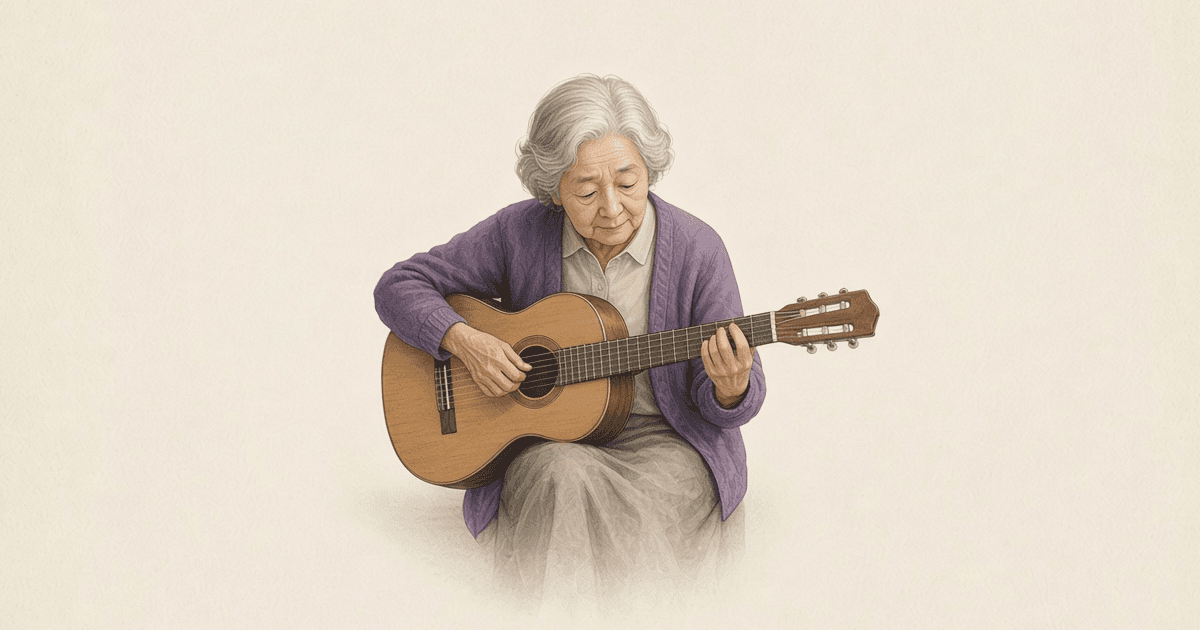
There's a skill you've probably thought about picking up — a language, an instrument, coding, drawing, dancing — and then talked yourself out of with some version of "I'm too old to start now" or "I'm just not a natural at that sort of thing." Here's the genuinely liberating news: neuroscience says both of those beliefs are wrong. Your brain remains capable of learning new things throughout your entire life, and talent matters far less than you think. What actually determines whether you learn isn't age or gift — it's how you practise, and whether you keep showing up.
Your brain never stops being able to change
For a long time, scientists believed the brain was essentially fixed after childhood — that you couldn't teach an old dog new tricks. That old dogma has been thoroughly disproven. We now know the brain has a property called neuroplasticity: the ability to form, strengthen, and reorganise its connections in response to experience — and it continues throughout life.
When you learn something new, the tiny junctions between your brain cells (synapses) become stronger and more efficient. This happens at 25, at 50, at 75. Research shows that repeatedly engaging in tasks that stretch your abilities produces real changes in brain structure and activity even in older adults. In fact, studies have found that older adults who learn multiple new skills can, over time, reach cognitive test scores similar to young adults. Your brain is not a fixed lump of hardware you're stuck with — it's adaptable, at any age.
Yes, some things shift with age — processing speed can slow a little — but the fundamental capacity to learn remains remarkably intact. "Too old" is, quite simply, not how the brain works.
The belief itself is part of the problem
Here's a subtle but important finding: believing you're too old to learn can become a self-fulfilling prophecy. Research on ageing shows that internalised ageism — the assumption "I can't learn this anymore" — leads people to give up before they've genuinely tried, while positive beliefs about ageing are linked to better cognitive outcomes and even longer life.
The same is true of the "I'm not talented" belief. When you think you can't, you don't put in the focused practice that learning requires — so you don't improve — which "confirms" the belief. The belief creates the outcome. The good news is this works in reverse too: approach learning believing your brain can adapt (because it can), and you'll actually engage in the practice that makes it happen.
Talent is overrated; practice is everything
The idea that some people are just "naturals" and others aren't massively overstates the role of innate talent. What actually builds skill — in almost any domain — is the right kind of practice, sustained over time. Neuroplasticity is experience-dependent: the brain changes most in response to practice that is repeated, focused, effortful, and involves feedback. Passive exposure does very little; active, challenging engagement does a lot.
This is genuinely freeing. It means skill isn't a gift you either have or don't — it's something you build, through the kind of practice anyone can do. The person who seems naturally gifted almost always just practised more, and better, than you saw.
How to actually learn a new skill as an adult
So if age isn't the barrier and talent isn't the answer, here's what genuinely works — and it's all about how you practise.
Practise deliberately, at the edge of your ability
Don't just mindlessly repeat what you can already do — that feels comfortable but teaches little. Work at the edge of your ability, on the specific things you find hard, and pay attention to your mistakes. This "deliberate practice" — actively analysing what's going wrong and adjusting — is what forges stronger neural connections. Growth lives just outside your comfort zone.
Make it small, consistent, and daily
Neural rewiring takes time and, above all, repetition — which means consistency beats intensity every time. Short, regular practice sessions build a skill far more effectively than occasional long ones, and they're far easier to sustain. Fifteen focused minutes a day will take you further than a three-hour session once a fortnight. This is exactly why building a consistent learning habit matters more than motivation — and why anchoring practice to a daily cue with habit stacking is the reliable route in.
Start absurdly small to beat the fear
A lot of what stops adults isn't ability — it's the discomfort of being a beginner, of being bad at something at first. Shrink the starting step until it's too small to be intimidating: five minutes, one phrase, one chord, one sketch. Two minutes is enough to begin, and once you're past the fear of starting, momentum takes over. Everyone is bad at a new skill at first — that's not evidence you can't do it, it's just the beginning for everyone.
Protect your sleep
Here's an underrated one: neuroplasticity doesn't only happen while you practise — a lot of it happens while you sleep. During deep sleep, your brain consolidates what you've learned, strengthening the new connections. So good sleep isn't separate from learning — it's part of how the skill actually locks in. Practise, then sleep on it, literally.
Be patient and kind with yourself
Progress in a new skill is uneven, and there'll be plateaus and frustrating days. That's normal, not proof you've hit your limit. Adults often quit out of impatience, expecting fast results and reading the natural slow patches as failure. Treat setbacks with self-compassion rather than self-criticism, celebrate small wins (which reinforce the habit), and keep showing up. The rewiring is happening even when you can't feel it.
The only real barrier is starting
You are not too old, and you don't lack the talent. Your brain is ready to rewire itself around a new skill at any age — it just needs the right kind of practice: small, consistent, deliberate, and sustained, with good sleep and a bit of patience. The person who learns the language, plays the instrument, masters the skill isn't the youngest or the most gifted. They're the one who believed they could, started small, and kept going. That can be you — the science is genuinely on your side.
Ready to put this into practice?
Pick that skill you've been putting off, shrink it to a tiny daily practice, and add it as a Spark in HabitSpark AI. Your brain can learn it — start small, stay consistent, and let neuroplasticity do its quiet work.