Practical Guides
Starting to Exercise From Zero: A Beginner's Guide That Won't Overwhelm You
If you're starting from the couch, most fitness advice is intimidating and easy to quit. Here's the beginner-friendly, science-backed way to begin moving — and actually keep it up.
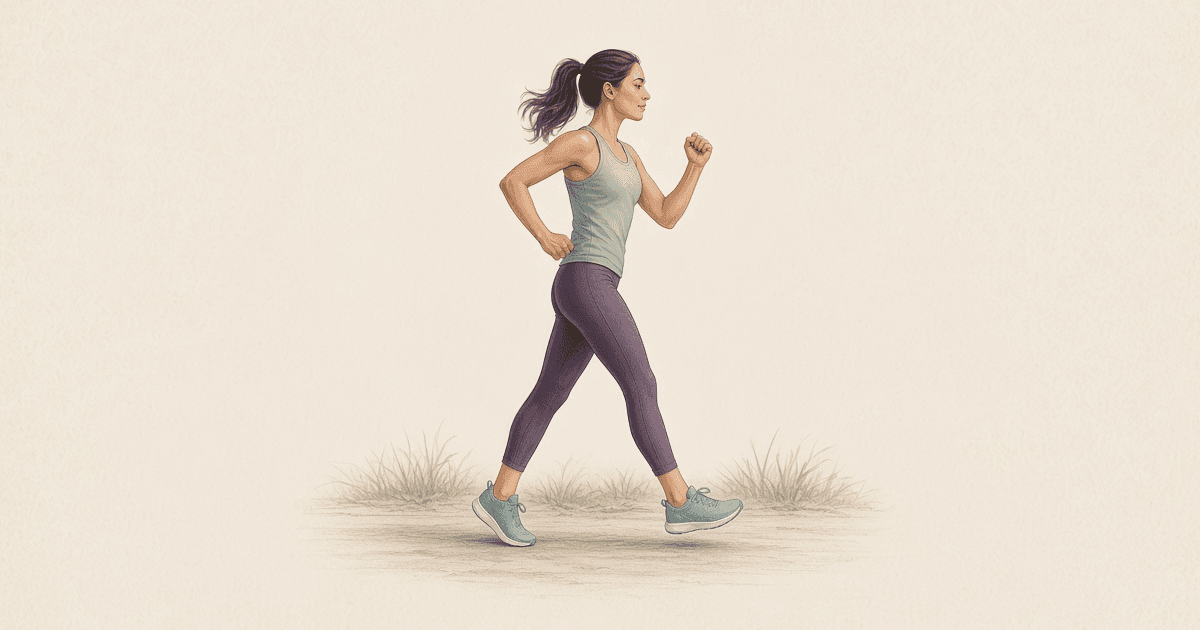
If you haven't exercised in a while — or ever — starting can feel genuinely intimidating. Most fitness advice seems aimed at people who are already fit, throwing around hour-long workouts and intensity that makes you tired just reading it. So you conclude it's not for you, or not worth starting unless you can do it "properly," and you stay on the couch. Here's the liberating truth the research actually supports: the way to begin is to start ridiculously small, and that small start matters far more than you think.
(A quick note: if you have any health conditions, are pregnant, or haven't been active in a long time, it's worth a quick chat with your doctor before starting a new exercise routine. This is general information, not medical advice.)
The biggest gains come at the very start
Here's the single most encouraging fact in all of exercise science, and it's aimed right at beginners. The health benefits of physical activity don't increase in a straight line — the steepest gains happen at the very beginning, as you move from doing nothing to doing a little.
In plain terms: the jump from sedentary to lightly active gives you a bigger health return than the jump from already-fit to super-fit. The person going from zero to a daily walk gains more, proportionally, than the gym regular adding a sixth weekly session. So as a beginner, you're not at a disadvantage — you're standing exactly where the biggest, easiest wins are. You don't need to become an athlete. You just need to stop being sedentary, and that first small step does a remarkable amount.
"Go hard or go home" is why people quit
The belief that exercise has to be punishing to count is one of the main reasons people never start — or start too hard, hurt or exhaust themselves, and give up within a fortnight. Researchers and trainers point to this "all or nothing" mindset as a genuine barrier: people think if they can't do a full, intense workout, there's no point.
There is enormous point. A ten-minute walk counts. Five minutes of movement counts. The research is clear that short bouts of activity deliver real benefits — and crucially, the true value of starting with ten minutes is that it builds the habit that leads to more. The small start isn't a compromise; it's the on-ramp.
Start with "exercise snacks"
One of the most beginner-friendly ideas in recent research is the "exercise snack" — a very short burst of movement, a few minutes at a time, scattered through your day. A brisk walk after a meal, a few sit-to-stands from a chair, a short flight of stairs. These tiny doses genuinely improve health markers — post-meal walks, for instance, help steady your blood sugar — and they're small enough that "I don't have time" and "I'm not fit enough" both stop being reasons not to.
For a complete beginner, exercise snacks are perfect: no gym, no kit, no getting changed, no intimidation. Just a few minutes of moving, a few times a day. It's the lowest-possible barrier to becoming an active person.
Make it laughably easy to start
The habit science here is simple: the smaller and easier you make the starting action, the more likely you are to actually do it. So shrink your first version of exercise until it's almost impossible to say no to:
- "Go for a run" → "put on my trainers and walk to the end of the road."
- "Do a workout" → "do five minutes."
- "Go to the gym" → "do ten squats while the kettle boils."
This is the two-minute rule applied to fitness. Once you've started, you'll often do more — but even on the days you don't, you've kept the habit alive, and that's the win. Consistency, not intensity, is what turns "trying to exercise" into "being someone who exercises."
Pick something you don't hate
You do not have to run, lift, or do anything you find miserable. The best exercise for a beginner is simply the one you'll actually keep doing — and enjoyment is one of the strongest predictors of whether you stick with it. Walking, dancing, swimming, cycling, gentle yoga, kicking a ball around with your kids — it all counts. If you dread it, you'll quit it; if you quite like it, you'll keep it. So choose accordingly, and give yourself permission to make it pleasant.
Reduce the friction around it
Make starting as effortless as possible by setting up your environment to help:
- Lay your kit out the night before (or sleep in your workout clothes).
- Keep your trainers by the door.
- Anchor movement to something you already do — "after my morning coffee, a ten-minute walk." That's the reliable way to make it stick.
Every obstacle you remove between the intention and the action makes it a little more automatic.
Expect it to feel like a lot at first — that's normal
One honest expectation to set: the first few weeks will feel effortful, and building the habit takes longer than people expect — often a couple of months of showing up before it feels natural. That awkward early stage isn't a sign you're failing or "not a fitness person." It's just what the beginning feels like for everyone. Track your consistency, be kind to yourself on the harder days, and let repetition do its slow work. (And a little muscle soreness when starting is normal; sharp pain is not — ease off and rest if something actually hurts.)
The couch to "a little" is the biggest step you'll ever take
You don't need to transform into a gym person overnight, and you definitely don't need to earn your right to start by suffering. The research could not be clearer: going from nothing to a little is where the biggest health rewards live, and a tiny, consistent, genuinely-doable start beats an ambitious plan you abandon in two weeks. Put your trainers on, walk to the end of the road, and let that be enough for today. That first small step is the whole beginning — and it counts for more than you think.
Ready to put this into practice?
Pick the smallest possible version of movement — a ten-minute walk, five minutes of stretching, ten squats by the kettle — and add it as a Spark in HabitSpark AI. Start tiny, keep it consistent, and let it grow from there.